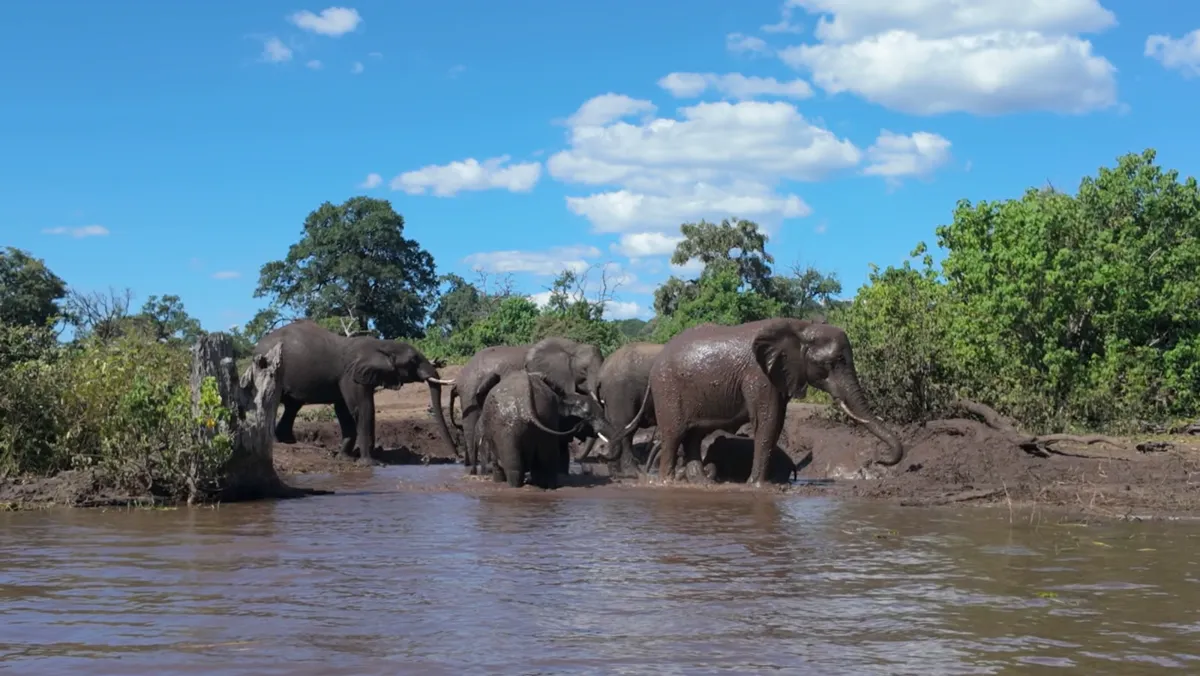
If you're based in Livingstone and want a real safari — not a game drive in a small park, but the kind of place where elephants come down to the water in their hundreds — Chobe is the answer. Chobe National Park in Botswana has one of the highest concentrations of elephants on the African continent, and it sits close enough to Livingstone that you can do it in a single, long, very worthwhile day.
This guide covers exactly how a Chobe day trip works from the Zambia side: the drive and border crossing, the two halves of the day (a river cruise and a land game drive), what you'll realistically see, what it costs, and how to book it. It's the most "proper safari" thing you can do out of Livingstone without committing to a multi-day trip.
How the day works — cruise + game drive
What you'll see
The border crossing & logistics
Practical info — timing, cost, what to bring
Best time to go
Is it worth it? Chobe vs Mosi-oa-Tunya
Why Chobe from Livingstone
Livingstone is built around Victoria Falls, and the falls are the reason most people come. But a lot of visitors also want a safari while they're in this corner of Africa — and the local park, Mosi-oa-Tunya, while genuinely good, is small and doesn't have the big herds or predators. Chobe does.
What makes Chobe special is the Chobe River. The river forms the northern edge of the park, and in the dry season animals concentrate along it in numbers that are hard to believe until you see them. Elephants cross and bathe, buffalo graze the floodplain, hippos and crocodiles sit in the channels, and the birdlife is constant. Because you can experience it both from a boat and from a vehicle, you get two completely different angles on the same wildlife in one day.
How the Day Works — River Cruise + Game Drive
A Chobe day trip is built around two completely different experiences — a land game drive and a boat cruise on the Chobe River — split by lunch. The order varies depending on the operator and the season; on my trip the game drive came first and the river cruise was the afternoon, and honestly the boat was the highlight.
The game drive. You head into the park in an open 4x4 game vehicle for a land-based safari. This is where you have the best chance of predators and the bush animals away from the water — on our drive we saw lion and even cheetah, along with several antelope species, impala in numbers, and more.
Lunch. A buffet lunch at a lodge in Kasane, overlooking the river, is part of the day.
The river cruise. You board a boat on the Chobe River and drift along the bank where the animals gather at the water. Being on the water gets you closer than a vehicle can, and the photography is superb because you're at eye level with everything on the bank — elephants, hippos surfacing beside the boat, crocodiles on the sand, and birds everywhere. For me this was the part that made the whole trip.
Book a full-day Chobe safari from Livingstone — river cruise, lunch and game drive included.
Check Availability & Book →What You'll See
Chobe is famous above all for elephants — the park is estimated to hold tens of thousands of them, and along the river in the dry season you'll often see herd after herd. Big bulls, breeding herds with tiny calves, animals crossing the channels with just trunks above the water. It's the kind of sighting that defines a trip.
Beyond elephants, on a typical day you can reasonably expect: hippos and crocodiles in and along the river; buffalo in large numbers on the floodplain; antelope including impala, kudu, puku and sable; and an enormous variety of birds — fish eagles, kingfishers, bee-eaters, storks and more. Predators are around too — on my game drive we saw both lion and cheetah, which is a genuine treat, plus a real chance of leopard, giraffe and other big game. As always with wildlife, nothing is guaranteed — but Chobe's density means most people leave having seen a lot.
The Border Crossing & Logistics
Chobe is in Botswana, so a day trip means crossing an international border at Kazungula, where Zambia and Botswana meet near the Zambezi. The drive from Livingstone to the border is roughly 1 to 1.5 hours, and the park entrance at Kasane is just beyond it.
The good news: organised day tours handle the logistics. Your guide drives you to the border, helps you through the Botswana entry formalities on both sides, and the better packages even cover the park fees and visa fees so there's nothing to pay at the crossing. Your job is mostly to bring the right documents and be ready for an early start.
Practical Info — Timing, Cost, What to Bring
It's an early start and a long day. Pickups from Livingstone lodges are typically around 6:30–7:30am, and you'll usually be back in the early evening. That's the trade-off for fitting a cross-border safari into a single day — embrace it, and you get an enormous amount packed into the hours.
Cost & what's included. A full-day Chobe trip is one of the pricier excursions from Livingstone, because it bundles a lot into one day — but a good package leaves you with almost nothing to pay on the ground. The tour I'd point you to includes hotel pickup and return, transport in an air-conditioned vehicle, the Chobe River cruise, the afternoon game drive in an open 4x4, a local guide, a buffet lunch, refreshment drinks and water through the day, and — importantly — the national park fees ($25 per person), tips and the Botswana visa fees. That last part matters: it means no scrambling for cash at the border. On my own trip everything was covered too; the only thing I paid extra for was drinks with lunch. When you book, just double-check these inclusions on the listing so there are no surprises.
One more thing worth knowing: it's a lot of time in transport and on the move. If you're travelling with young kids or anyone who struggles with long days, factor that in. For most travellers, though, the day flies by once you're on the river.
Best Time to Go
Dry season (roughly May–October) is the classic time for Chobe. As the land dries out, animals are forced to the river to drink — which is exactly where the boat cruise takes you. This is when the elephant concentrations along the Chobe River are at their most spectacular, and it lines up neatly with the popular Victoria Falls visiting window.
Green season (November–March) brings the rains, lush scenery and migratory birds, with animals more spread out and water less of a magnet. It's a beautiful time to visit and good for birding, but if your priority is sheer numbers of elephants at the water, aim for the dry months.
Is It Worth It? Chobe vs Mosi-oa-Tunya
This is the question a lot of Livingstone visitors ask, so here's the honest comparison. Mosi-oa-Tunya is right next to town, cheap, takes half a morning, and lets you walk on foot near white rhino — a genuinely rare experience. What it doesn't have is big herds or predators.
Chobe is the opposite: a full day, a border crossing, a higher price — but a true big-game safari with elephants in extraordinary numbers, plus lions, buffalo, hippos and the river cruise. If you only have time and budget for one and you want the classic African safari feeling, Chobe is the one. If you want a quick, affordable wildlife hit close to town, Mosi-oa-Tunya. Many visitors with a few days in Livingstone do both — they're different enough to be worth it.
For most people deciding how to spend a safari day out of Livingstone, Chobe is the trip that delivers the "I can't believe how many elephants there are" moment. It's a long day, but it's the one people talk about long after they get home.
Ready to go? Check dates and book your full-day Chobe safari from Livingstone below.
Book the Chobe Day Trip →