Most people come to Livingstone for Victoria Falls and leave without setting foot in the national park that sits right next door. That's a mistake. Mosi-oa-Tunya National Park is one of the few places in Zambia where you can walk on foot to within metres of wild white rhinos — a mother and calf, in the open, with nothing between you and them except a guide who knows exactly what they're doing. That moment alone is worth the entry.
The park is small — about 66 square kilometres — but it packs in more than most people expect. This guide covers what you'll actually see, how the rhino walk works, when to go, and what surprised me when I visited.
The rhino walk — the real highlight
Practical info — timing, pickup, what to expect
Best time to visit
Is it worth it?
What Animals You'll See
Mosi-oa-Tunya is not the Serengeti. You won't see lions or leopards — the park is too small and too close to a city for big cats. What it does have is a genuinely varied cast of animals in a compact area, which means you'll likely see a lot in a few hours without driving for hours between sightings.
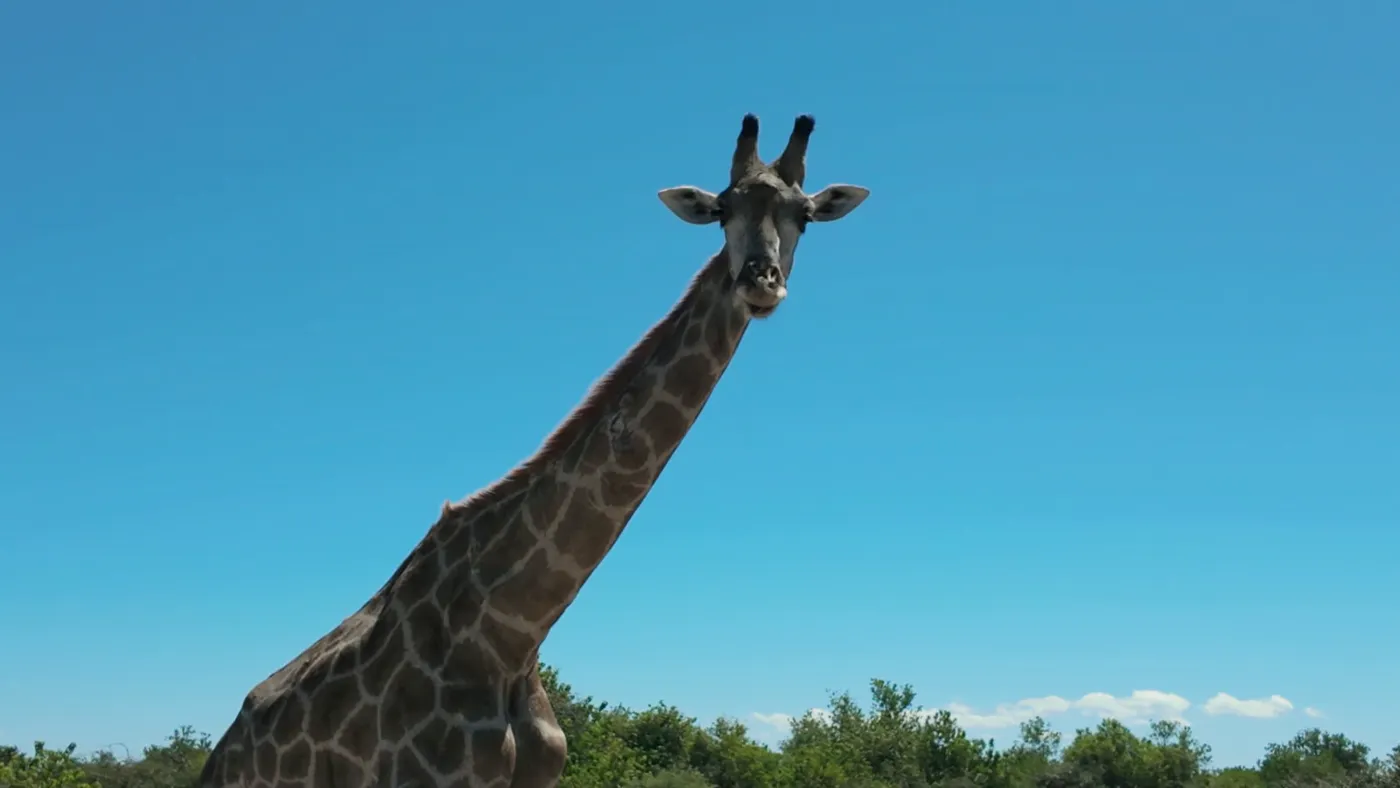
On a single morning visit you can reasonably expect: impalas everywhere — they're the most abundant animal in the park and move in large, relaxed herds. Baboons, often roadside and completely unbothered by vehicles. Giraffes, tall above the treeline and calm enough to observe properly. Zebras in small groups. Monitor lizards sunning themselves on rocks or tracks. A huge variety of birds if you pay attention.
Warthogs are another one worth mentioning — not because they're dramatic, but because they're exactly what you've seen in films. They really do run with their tails straight up like little antennas. Seeing it in person is funnier and better than expected.
The white rhinos are the centrepiece of the park and get their own section below — but the point is that even without them, the park delivers a proper, varied game experience within 10 minutes of Livingstone town.
The Rhino Walk — The Real Highlight
This is what makes Mosi-oa-Tunya different from almost anywhere else. The park is home to a small population of southern white rhinos — reintroduced after the species was wiped out in Zambia by poaching. They're monitored daily by dedicated rangers who know where the animals are at any given time.
The rhino walk works like this: you drive into the park and at some point your guide gets word on where the rhinos are. Then the vehicle stops. And the guide says you're getting out and walking.
I genuinely didn't see that coming. You step out of the vehicle, follow the guide on foot through the bush, and approach the animals slowly and carefully. The rangers with you have done this hundreds of times — they read the animals' body language continuously and know exactly how close is safe. We got to within 20 or 30 metres of a mother and her calf. Standing on open ground, in silence, watching a white rhino graze with her young — it's one of those moments where you're very aware of what you're looking at and what it means that it still exists.
A good guide will ask at the start what you're hoping to see. Ours did — and then genuinely tried to deliver it. That makes a real difference. The animals can't be guaranteed, but the effort to find them can be.
Book a guided game drive or rhino walk in Mosi-oa-Tunya below.
Book Mosi-oa-Tunya Tour →Practical Info — Timing, Pickup, What to Expect
Start early. This is not optional. Wildlife in Africa is most active in the cooler morning hours — once the midday heat arrives, animals retreat into shade and sightings drop off sharply. Our pickup was around 6am. That sounds early, but by the time you're in the park, the light is beautiful and the animals are moving.
Most tour operators in Livingstone include hotel pickup in the price. Worth confirming when you book — the park is only a few kilometres from town but having transport sorted makes the early start easier.
The park entry fee for non-residents is separate from the tour fee — confirm with your operator whether it's included. Most organised tours cover it. If you're going independently, budget for it on top of transport.
Tours typically run two to three hours for a morning game drive. If the rhino walk is included, allow a bit more time — finding and approaching the rhinos on foot takes as long as it takes.
Best Time to Visit
The park runs year-round, but the experience shifts with the seasons.
Dry season (May–October) is the classic safari window. Vegetation thins out as water sources dry up, which means animals congregate around rivers and waterholes and are easier to spot. The bush is more open and sightlines are longer. This is when most serious safari visitors come.
Just after the rains (March–May) is a different but equally worthwhile experience. The park is intensely green — lush and overgrown in a way that feels more like a jungle than a savanna. Spotting animals through dense vegetation requires more patience, but the landscape is genuinely beautiful and the park feels alive. I visited in this window and the colours were striking.
Is It Worth It?
If you're already in Livingstone: yes, without hesitation. The park is close, the tour takes half a morning, and the rhino walk is a genuinely rare experience. Most game parks in Africa are vehicle-only — walking to within metres of a wild rhino is not something you can do in most places on the continent.
The other thing worth saying is that Mosi-oa-Tunya doesn't get the attention that Chobe or South Luangwa do — which means it's quieter, less crowded, and easier to have those uninterrupted moments with animals. The buffalo that walked past our vehicle didn't have five other Land Rovers watching. That matters.
It pairs well with a Victoria Falls visit — you can do the park in the morning and the falls in the afternoon, or the other way around. Two completely different experiences that cover the breadth of what makes this corner of Zambia worth the trip.
Check availability for guided tours in Mosi-oa-Tunya National Park below.
Check Availability & Book →